
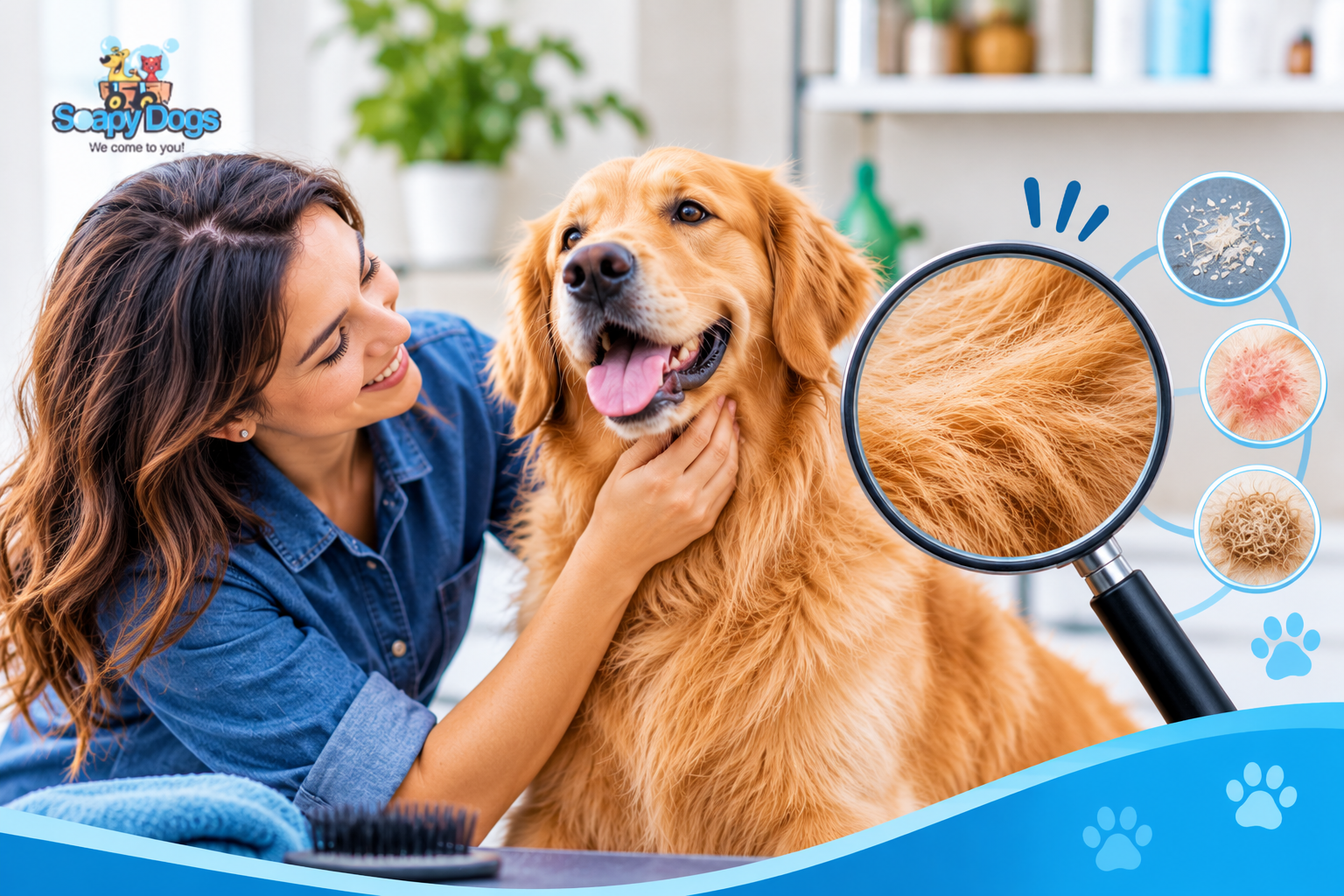
Summary: A dog’s coat can reveal signs of dryness, irritation, unusual shedding, and other changes that deserve attention. This blog explains how regular brushing and professional grooming help pet owners notice visible concerns, manage tangles, and maintain coat care. It also highlights how Soapy Dogs’ mobile grooming services support pet comfort in Littleton, CO.
A dog’s coat can reveal more than whether bath time is overdue. Dry patches, unusual shedding, skin flakes, and a dull coat may point to changes worth noticing. Regular dog grooming in Littleton Co gives pet owners a chance to spot these signs early, keep fur manageable, and support everyday comfort. Grooming cannot replace veterinary care, but it can help you know when your dog needs extra attention.
A soft, clean coat feels lovely to touch, but its condition can also offer useful clues about your dog’s well-being. During brushing, bathing, and trimming, changes in the fur and skin may become easier to see.
For example, a coat that suddenly looks dull may need more than a simple bath. Dry flakes, greasy areas, or repeated tangles can also suggest that something has changed. These signs do not always mean a serious problem. However, a closer look can help you decide what kind of care your pet needs.
Some changes are easy to miss when your dog has thick or long fur. Regular brushing helps you notice unusual spots before loose hair and dirt cover the area.
Look out for these signs during routine care:
A groomer can point out visible concerns, but a veterinarian must assess the cause.
A dog’s skin produces natural oils that help protect the coat. When the balance changes, fur may feel rough, look dull, or become greasy. Flaky skin can also appear during dry weather or when irritation is present.
An unusual smell deserves attention too. Sometimes, a regular bath helps remove dirt and surface odor. However, a smell that returns quickly may be linked to a skin, ear, or dental concern. A groomer can help clean the coat and notice where the smell seems strongest, but a vet should investigate a lasting problem.
Using the right shampoo also matters. Products made for people may not suit a dog’s skin. A pet-safe product chosen for the dog’s coat and skin needs is a better option.
Loose hair is a normal part of life for many dogs. Some breeds shed more than others, and seasonal changes can affect the amount of fur left on furniture and clothing.
Still, there is a difference between normal shedding and clear hair loss. Thin areas, bald patches, or fur that comes away easily may be linked to parasites, allergies, infections, or other health concerns. The pattern and timing can help a veterinarian understand what is happening.
A de-shedding session can remove loose undercoat and make brushing easier. However, it should not be used to hide sudden hair loss. Share any unusual changes with your groomer and arrange a veterinary check when needed.
Knots and mats often form behind the ears, under the legs, around the collar, and near the tail. Long or curly coats may need regular brushing to prevent tight tangles.
A small knot may seem harmless, but a thick mat can pull on the skin and cause discomfort. It can also make it harder to see redness, small sores, or other changes underneath. Pulling at a tight mat with a home brush may hurt your dog.
Professional grooming can help remove tangles with suitable tools and a careful approach. When a mat sits close to the skin, a groomer may need to trim the area rather than try to brush it out. The main goal should always be comfort, not keeping every inch of fur at its original length.
A grooming session gives a trained professional time to look closely at areas that are often missed during a quick home brush. Bathing and coat care can make some visible changes easier to notice.
A careful session may help bring attention to:
A groomer does not diagnose skin disease or prescribe treatment. The value lies in noticing a change and telling the pet owner what needs a closer look.
You do not need a large collection of tools to care for your dog’s coat at home. A simple routine can help keep fur manageable between professional visits.
Brush your dog as often as the coat type requires. Short coats may need less frequent brushing, while long or thick coats often need more attention. Use a brush suited to the breed and coat, and work gently around sensitive areas.
Also, check the skin while brushing. Notice whether your dog pulls away, scratches often, or seems uncomfortable when you touch a certain spot. Keep a note of new changes, including when the problem began. These details can help your groomer or veterinarian understand the concern.
Grooming supports cleanliness and comfort, but it is not a medical treatment. Some skin concerns have similar signs and need a proper examination to identify the cause.
Contact a veterinarian when you notice repeated scratching, frequent licking, bald patches, persistent odor, open sores, swelling, or skin that looks painful. Seek prompt care for bleeding wounds, severe swelling, or signs of infection. Do not apply human creams or medicated products without veterinary advice.
The vet may check for allergies, parasites, infection, or another health issue. Treatment depends on the cause, so guessing can delay the right care.
Some dogs become uneasy during car rides or in busy grooming salons. Mobile grooming offers another option by bringing the grooming setup close to home. This can make the process more convenient and may reduce travel-related stress for some pets.
Pet owners looking for dog groomers home service can also consider the value of one-on-one attention. Soapy Dogs provides mobile grooming in Littleton and nearby communities through fully equipped, climate-controlled trailers. Services include bathing, brushing, de-shedding, coat trims, nail care, and ear cleaning.
A pet’s comfort should guide the session. Sharing details about skin sensitivity, past grooming experiences, age, and behavior helps the groomer plan suitable care.
Your dog’s coat can offer helpful clues about comfort and skin condition. A change in texture, unusual smell, extra shedding, or repeated tangles may be a reason to look more closely. Regular brushing and professional grooming help keep the coat clean and make visible changes easier to notice.
For local pet owners, dog grooming Littleton Co can be part of a steady care routine that supports a clean, comfortable coat. Soapy Dogs offers mobile grooming services designed around each pet’s needs, with bathing, brushing, coat care, and gentle handling. Visit Soapy Dogs or call (720) 941-5835 to discuss your dog’s grooming needs and request an appointment. A little attention today can help you take the right next step for your pet.
1. How often should I groom my dog?
The right schedule depends on your dog’s breed, coat type, activity level, and skin needs.
2. Can grooming help with excessive shedding?
Brushing and de-shedding can remove loose hair, but sudden or patchy hair loss needs veterinary attention.
3. Why does my dog still smell after a bath?
A lasting odor may come from the skin, ears, or mouth, so ask a veterinarian to check it.
4. Can grooming help find skin problems?
A groomer may notice visible changes, but only a veterinarian can diagnose the cause.
5. Is mobile grooming suitable for nervous or older dogs?
It may be a calmer option for some pets, and the groomer should know about any health or handling concerns before the session.